Mike Cannon-Brookes: Written Off in April, Vindicated by August
Atlassian's return to quarterly profit sent the stock up 35 per cent overnight this month. Two decades after the company was started on credit cards, its co-founder's long bets are all compounding at once.
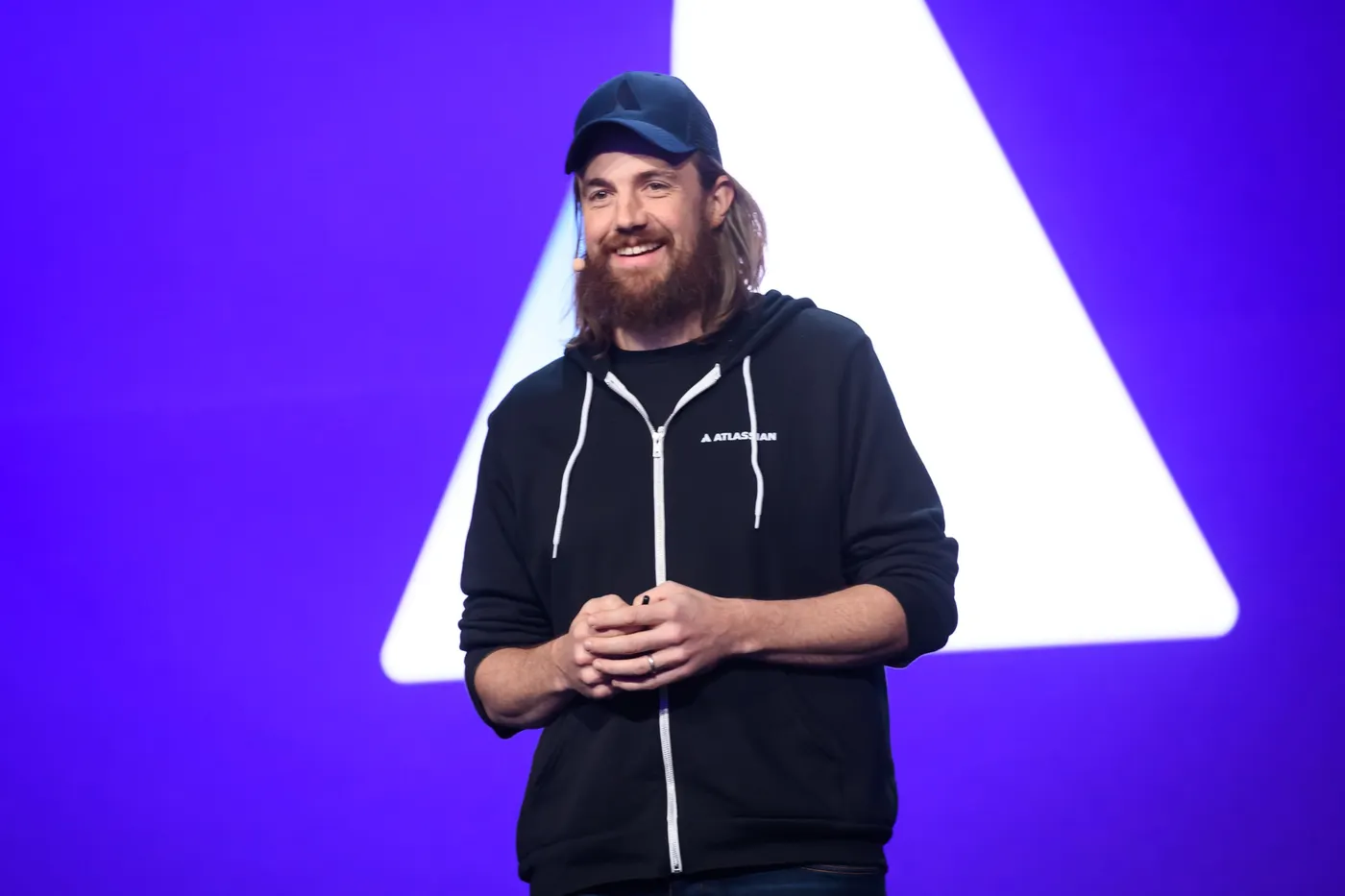
When Wall Street closed on a Thursday early this month, Mike Cannon-Brookes' stake in the company he co-founded was worth about US$5.2 billion. By breakfast it was closer to US$7 billion. Atlassian had posted its first quarterly operating profit in more than two years, and the shares jumped as much as 35 per cent in after-hours trading.
The numbers behind the surge were emphatic, fourth-quarter revenue rose 28 per cent to US$1.77 billion, well ahead of the US$1.66 billion analysts had pencilled in. Operating income came in at US$211 million against a US$28 million loss a year earlier, and earnings of US$1.87 a share beat consensus by a wide margin. Cannon-Brookes told investors he would buy up to US$250 million of Atlassian stock on the open market with his own money, a statement of conviction that helped drive the rally.
It is a long way from the origin story, Cannon-Brookes and Scott Farquhar started Atlassian in Sydney soon after graduating, funding it on credit cards, and built the maker of Jira and Trello into a New York-listed company used across the world. Farquhar stepped back from the co-chief executive role in 2024, but his verdict on the results was that of a man unsurprised. The company was built with a long term vision, he said in a statement, and the results were testament to its durability and the runway ahead with AI.
That runway is the striking part, barely a year ago the market was pricing Atlassian as a casualty of the AI era, on the theory that software charged per user would suffer as AI agents replaced the humans holding licences. The stock bottomed hard in April. Cannon-Brookes' answer was to lean in rather than defend and the company's AI-powered developer tools passed one million monthly active users this quarter, more than doubling in three months, and Rovo, its AI agent, is now used by more than 80 per cent of the Fortune 500. AI, he told shareholders, is the best thing that has ever happened to Atlassian. Models are becoming a commodity, while the accumulated internal context of a company's work cannot be bought.
The same patience shows in everything else he touches and through his private investment company Grok Ventures, Cannon-Brookes took control of Sun Cable in 2023, injecting $65 million while the solar venture sat in administration, and kept alive a project most had written off. The Northern Territory solar farm intended to grow to 6 gigawatts, is the largest array in the world aiming to supply Darwin by 2030 and Singapore in the early 2030s through a 4,300 kilometre undersea cable. Demand has answered the ambition, with expressions of interest running at six times the first Darwin stage and Singaporean appetite exceeding the cable's planned capacity. The next commodities boom, he said at the time, would be founded not on coal but on the generation and export of renewable energy.
Atlassian itself already runs on 100 per cent renewable electricity and has a science-based target of net zero no later than 2040, with a house rule that no such claim can be made until emissions have been cut directly by 90 per cent. The company took that discipline public in a guide urging other firms to follow, under a title too direct to reprint in full.
The empire keeps adding storeys in the literal sense too with the 40-floor Atlassian headquarters rising beside Sydney's Central Station, due to open in 2028, and Cannon-Brookes has guaranteed it will be pretty full by the time the company moves in. With the Williams Formula 1 sponsorship carrying the brand around the world and a workforce spread across 17 countries choosing where they work, the company he started on plastic looks less like a survivor of the AI era than one of its likelier winners. Twenty-something years in, the long game is paying out.